 EN
EN

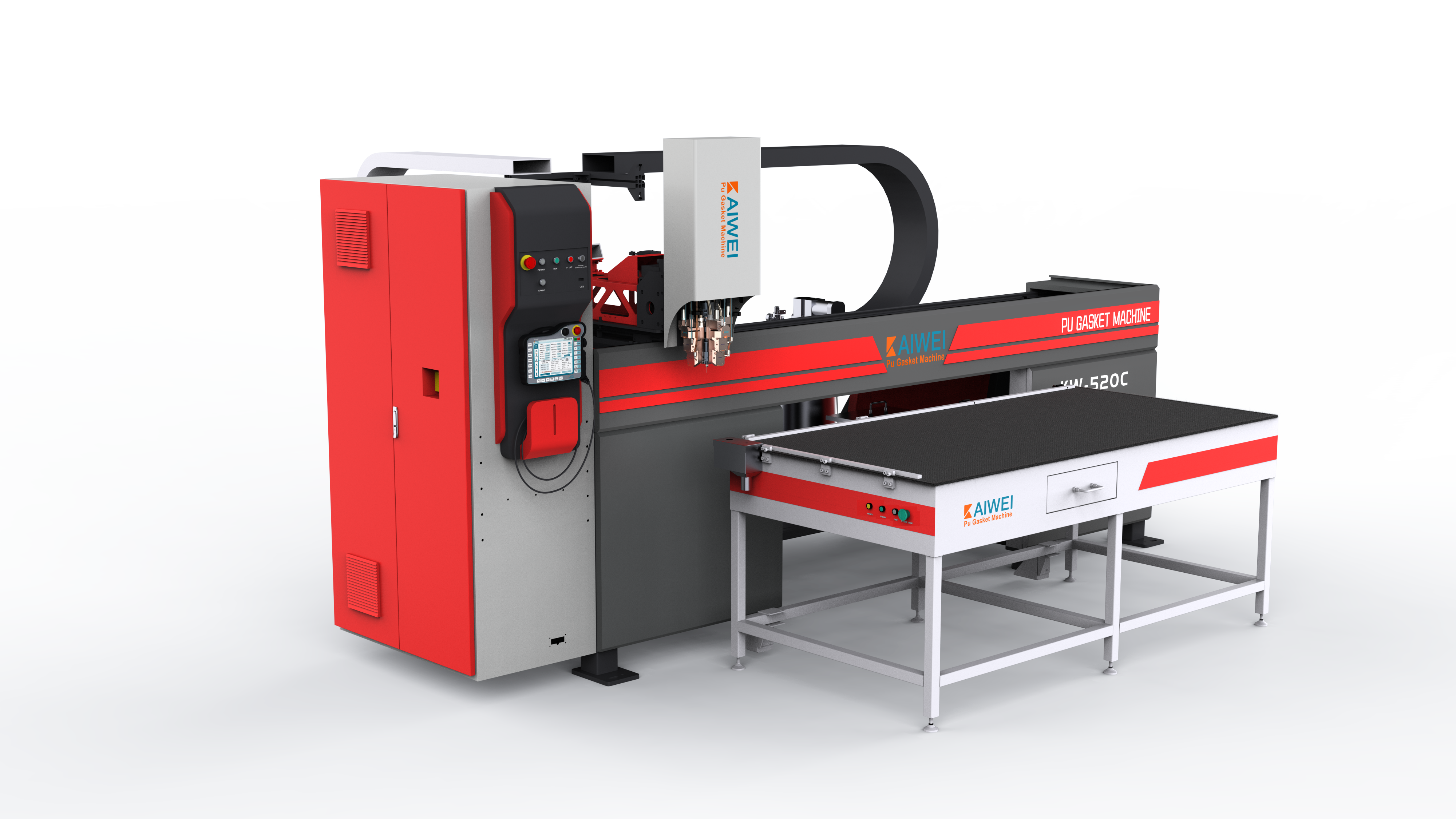
In today's industrial landscape, precision sealing solutions have become critical for maintaining optimal performance across various applications. Manufacturing facilities, air filtration systems, and automotive industries increasingly rely on advanced sealing technologies to ensure product integrity and operational efficiency. The evolution of sealing technology has brought forth sophisticated equipment designed to meet stringent quality standards while delivering consistent results. Modern production environments demand reliable solutions that can handle diverse materials and complex geometric requirements with exceptional accuracy.
Understanding Modern Sealing Technology Applications
Air Filtration Industry Requirements
The air filtration sector presents unique challenges that require specialized sealing solutions capable of withstanding environmental pressures and maintaining hermetic seals. HEPA filters, industrial air purification systems, and automotive cabin filters all depend on precise gasket applications to prevent air bypass and ensure maximum filtration efficiency. These applications demand materials that exhibit excellent compression set resistance while maintaining flexibility across varying temperature ranges.
Manufacturing processes for air cleaning filters require consistent gasket placement with minimal variation in thickness and density. The precision required in these applications often exceeds traditional manual methods, necessitating automated solutions that can deliver repeatable results. Quality control standards in the filtration industry mandate that sealing components meet specific performance criteria including particle retention rates and pressure drop specifications.
Industrial Manufacturing Standards
Contemporary manufacturing facilities operate under increasingly strict quality management systems that require documented processes and validated equipment performance. Sealing applications in these environments must comply with various international standards including ISO certifications and industry-specific regulations. The traceability of materials and processes has become essential for maintaining certification compliance and ensuring product reliability.
Production efficiency metrics drive the adoption of automated sealing solutions that minimize waste while maximizing throughput. Modern manufacturing environments seek equipment that can integrate seamlessly with existing production lines while providing real-time monitoring capabilities. The ability to track process parameters and maintain consistent quality output directly impacts overall operational effectiveness and customer satisfaction levels.
Advanced Material Processing Capabilities
Polyurethane Foam Properties
Polyurethane foam materials offer exceptional versatility in sealing applications due to their unique cellular structure and mechanical properties. These materials demonstrate excellent recovery characteristics after compression while maintaining consistent density throughout the cross-section. The chemical resistance properties of polyurethane foams make them suitable for applications involving exposure to various environmental conditions and chemical substances.
Processing polyurethane foam requires precise temperature and pressure control to achieve optimal cellular structure and material properties. The curing process involves complex chemical reactions that must be carefully managed to ensure consistent results across production batches. Understanding the relationship between processing parameters and final material characteristics enables manufacturers to optimize their production processes for specific application requirements.
Precision Manufacturing Techniques
Advanced manufacturing techniques in gasket production involve sophisticated dispensing systems that can accurately control material flow rates and placement patterns. These systems utilize precision pumping mechanisms combined with programmable motion control to create complex geometric shapes with exceptional accuracy. The integration of vision systems and quality monitoring devices ensures that each produced component meets specified dimensional tolerances.
Temperature control systems play a crucial role in maintaining consistent material properties during the manufacturing process. Heated dispensing heads and controlled curing chambers enable optimal processing conditions that result in uniform density and mechanical properties throughout the gasket material. The ability to maintain precise environmental conditions directly impacts the quality and performance characteristics of the finished sealing components.
Automated Production System Benefits
Operational Efficiency Improvements
Implementing automated production systems for gasket manufacturing delivers significant improvements in operational efficiency through reduced cycle times and minimized material waste. These systems can operate continuously with minimal operator intervention while maintaining consistent quality output. The reduction in manual handling reduces the potential for contamination and ensures more predictable production schedules.
Automated systems provide enhanced flexibility in product changeover capabilities, allowing manufacturers to quickly adapt to different gasket specifications without extensive retooling procedures. This adaptability becomes particularly valuable in environments where multiple product variants must be produced efficiently. The ability to store and recall proven process parameters eliminates setup variations and reduces the time required for production transitions.
Quality Control and Consistency
Consistent quality output represents one of the primary advantages of automated gasket maker systems compared to manual production methods. These systems eliminate human variability factors while providing precise control over critical process parameters including material flow rates, dispensing patterns, and curing conditions. Real-time monitoring capabilities enable immediate detection of process deviations and automatic corrections to maintain quality standards.
Documentation and traceability features built into modern automated systems provide comprehensive records of production parameters and quality measurements for each manufactured component. This capability supports regulatory compliance requirements while enabling continuous process improvement through data analysis. The ability to correlate process parameters with quality outcomes facilitates optimization efforts and predictive maintenance scheduling.
Technical Specifications and Performance Parameters
Machine Configuration Options
Modern gasket manufacturing equipment offers extensive configuration options to accommodate diverse production requirements and facility constraints. These systems can be customized with various dispensing head configurations, material handling systems, and automation levels to match specific application needs. The modular design approach enables future expansion capabilities while maintaining compatibility with existing production infrastructure.
Control system sophistication ranges from basic programmable logic controllers to advanced industrial computers with integrated human-machine interfaces. These systems provide intuitive operation while offering comprehensive programming capabilities for complex gasket patterns and multi-material applications. Network connectivity options enable integration with enterprise resource planning systems and remote monitoring capabilities for enhanced operational visibility.
Performance Metrics and Capabilities
Production rate capabilities of advanced gasket maker systems typically range from hundreds to thousands of components per hour depending on complexity and size requirements. These systems maintain consistent cycle times while accommodating various material viscosities and dispensing patterns. The precision capabilities often achieve positional accuracies within fractions of millimeters while maintaining repeatable material placement.
Material utilization efficiency represents a critical performance metric that directly impacts operating costs and environmental sustainability. Advanced systems minimize material waste through precise dispensing control and optimized path planning algorithms. The ability to handle multiple material types simultaneously enables production of complex gasket designs with varying properties in different zones.
Industry Applications and Market Trends
Automotive Sector Developments
The automotive industry continues to drive innovation in gasket technology through demanding performance requirements and high-volume production needs. Vehicle manufacturers increasingly specify advanced sealing solutions for engine compartments, passenger cabin filtration, and electronic component protection. These applications require materials that can withstand extreme temperature variations while maintaining sealing effectiveness over extended service life.
Electric vehicle development has introduced new sealing challenges related to battery protection and thermal management systems. These applications often require specialized materials with enhanced electrical insulation properties and resistance to battery electrolytes. The transition toward electric mobility continues to create opportunities for advanced gasket maker technologies that can address these emerging requirements.
HVAC and Air Quality Markets
Growing awareness of indoor air quality has expanded market demand for high-performance air filtration systems in residential, commercial, and industrial applications. These systems require precision-manufactured gaskets that ensure optimal filter performance while minimizing bypass air flow. The trend toward energy-efficient building systems drives requirements for sealing solutions that minimize pressure drop while maintaining filtration effectiveness.
Healthcare facility requirements for air quality control have intensified following recent global health challenges, creating increased demand for reliable filtration systems. These applications often specify specialized gasket materials with antimicrobial properties and enhanced durability characteristics. The critical nature of these applications emphasizes the importance of consistent manufacturing processes and validated performance characteristics.
FAQ
What materials can be processed with automated gasket maker systems
Automated gasket maker systems can process various foam materials including polyurethane, polyethylene, and specialized foam compounds designed for specific applications. These systems typically handle materials with viscosity ranges suitable for dispensing applications while accommodating different curing characteristics. Material selection depends on the specific application requirements including temperature resistance, chemical compatibility, and mechanical properties needed for effective sealing performance.
How does automation improve gasket manufacturing quality
Automation eliminates human variability factors that can affect gasket quality while providing precise control over critical manufacturing parameters. Automated systems maintain consistent material flow rates, dispensing patterns, and environmental conditions throughout production runs. Real-time monitoring capabilities enable immediate detection of process variations and automatic adjustments to maintain quality standards, resulting in more predictable and reliable gasket performance characteristics.
What maintenance requirements exist for automated gasket production equipment
Regular maintenance requirements include cleaning of dispensing systems to prevent material buildup, calibration of flow control devices, and inspection of mechanical components for wear. Preventive maintenance schedules typically involve replacement of consumable components such as seals and filters according to manufacturer recommendations. Advanced systems often include predictive maintenance features that monitor component performance and provide early warning of potential issues before they affect production quality.
Can automated systems handle different gasket sizes and shapes
Modern automated gasket maker systems offer extensive flexibility in handling various gasket dimensions and geometric configurations through programmable motion control and adjustable dispensing parameters. These systems can accommodate gasket sizes ranging from small electronic component seals to large industrial filter gaskets. Quick changeover capabilities enable efficient transitions between different product specifications while maintaining precise dimensional control and material placement accuracy for each configuration.